Quantum Interference: The Wave-Like Heartbeat of Quantum Computation
Discover how the mind-bending phenomenon of quantum interference, where quantum states can amplify or cancel each other out, is fundamental to unlocking the power of quantum computers.
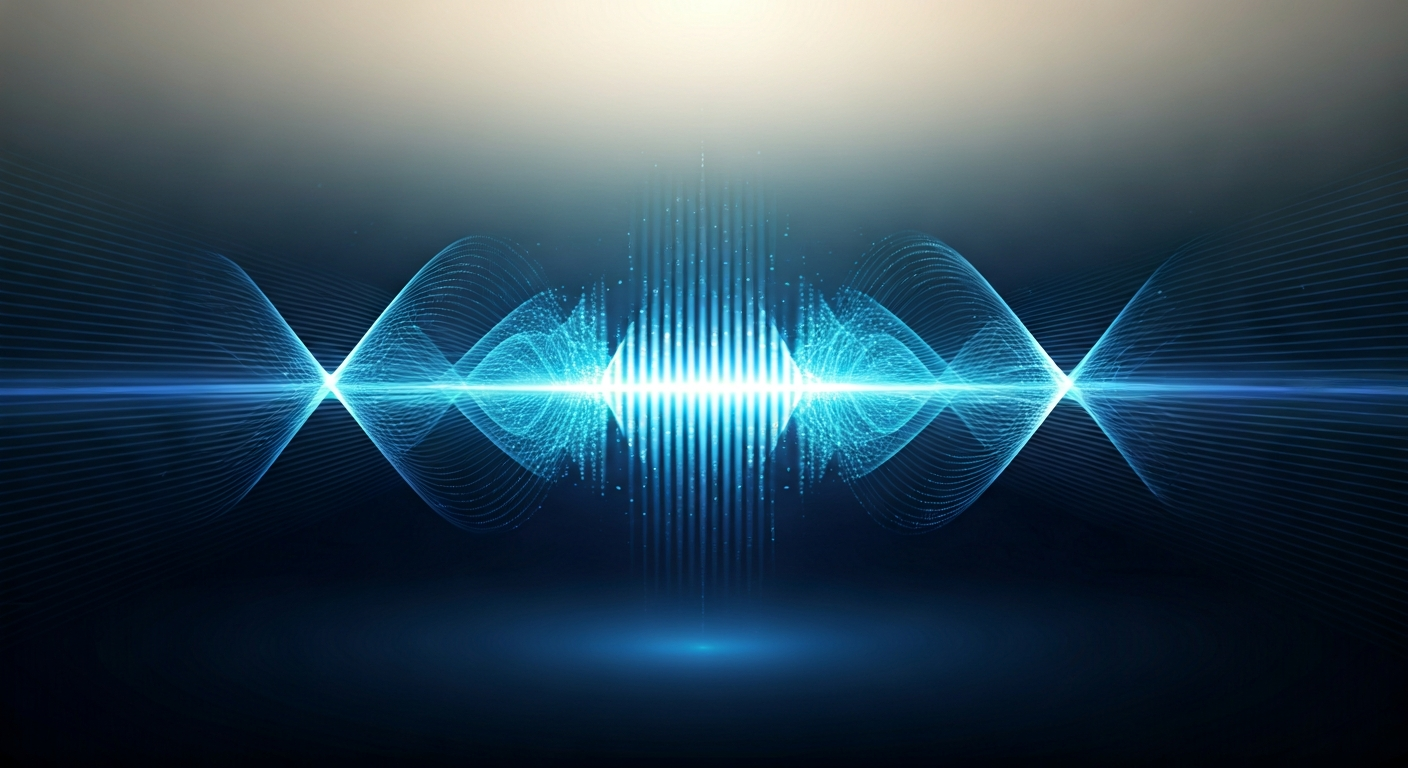
Imagine two waves on a pond. Where their crests meet, the wave is higher. Where a crest meets a trough, they cancel out. This is classical interference, a familiar concept. Quantum interference is its stranger, more powerful cousin. In the quantum world, particles like electrons and photons don't just behave like tiny balls; they also exhibit wave-like properties. When these quantum waves interact, they can interfere with each other in ways that are crucial for how quantum computers operate.
This phenomenon isn't just a theoretical curiosity; it's the engine driving many quantum algorithms. By carefully orchestrating quantum interference, we can amplify the probability of finding the correct answer to a computation while simultaneously suppressing the probabilities of incorrect answers. It’s this ability to manipulate probabilities through constructive and destructive interference that gives quantum computers their potential to solve problems intractable for even the most powerful classical supercomputers.
Watch
Related video, embedded from YouTube.
The Quantum Wave Nature of Reality
At the heart of quantum mechanics lies the principle that quantum objects, such as electrons, photons, and even atoms, possess both particle-like and wave-like characteristics. This duality means they can be described by a wave function, a mathematical entity that encodes the probability of finding the particle in a particular state or location. When these wave functions overlap, they can interfere, much like ripples on water.
This interference can be constructive, where the waves reinforce each other, increasing the probability of a certain outcome. Conversely, it can be destructive, where the waves cancel each other out, decreasing or eliminating the probability of a particular outcome. This ability to control probabilities is a cornerstone of quantum computation.
How Quantum Computers Harness Interference
Quantum computers use qubits, which can exist not only as 0 or 1 (like classical bits) but also as a superposition of both states simultaneously. When multiple qubits interact within a quantum computer, their wave functions can interfere. Quantum algorithms are designed to exploit this. They choreograph a series of operations that guide the qubits through a complex dance of superpositions and interference.
The goal is to engineer the interference pattern such that the wave functions corresponding to the correct solution to a problem constructively interfere, leading to a high probability of measuring that solution. Simultaneously, the wave functions for incorrect solutions are made to destructively interfere, minimizing their probability of being measured. This is how quantum computers can efficiently explore vast computational spaces.
The Challenge of Control
Precisely controlling quantum interference is incredibly difficult. Quantum states are fragile and easily disrupted by environmental noise (a phenomenon called decoherence). Even tiny disturbances can cause the delicate wave functions to collapse prematurely, destroying the interference pattern before the computation is complete.
Physicists and engineers must therefore create highly isolated environments for qubits and develop sophisticated methods to manipulate their quantum states with extreme precision. This requires advanced techniques in areas like laser control, magnetic shielding, and cryogenic cooling to maintain the quantum coherence necessary for interference to occur reliably.
Interference in Action: The Hong-Ou-Mandel Effect
A classic demonstration of quantum interference is the Hong-Ou-Mandel (HOM) effect, typically observed with photons. When two indistinguishable photons enter a beam splitter simultaneously, they exhibit a peculiar behavior: they always exit the beam splitter together, either both on the same side or both on opposite sides. This happens because their wave functions interfere.
If the photons are truly indistinguishable (identical in all properties), their wave functions will interfere destructively at one of the output ports, forcing them to bunch together at the other. This effect is a powerful tool for quantum information processing, including quantum computing and quantum communication, and has recently been demonstrated with systems beyond photons, such as with up to 12 neutral atoms, showcasing its versatility.
Applications and Future Potential
Quantum interference is not just theoretical; it's the operational principle behind many proposed quantum algorithms, such as Shor's algorithm for factoring large numbers (which has implications for cryptography) and Grover's algorithm for searching unsorted databases. The ability to manipulate probabilities through interference is what gives these algorithms their speed advantage over classical counterparts.
Beyond computation, interference phenomena are also vital for quantum sensing, enabling measurements with unprecedented precision, and for quantum communication, forming the basis of secure quantum key distribution. As quantum technologies mature, harnessing and controlling quantum interference will be key to unlocking their full potential across science, medicine, and industry.
Latest Developments
Recent advancements highlight the expanding reach and sophistication of quantum interference experiments. The demonstration of the Hong-Ou-Mandel effect with up to 12 neutral atoms signifies a leap in controlling multi-particle quantum interference, moving beyond the typical photonic systems. This opens new avenues for complex quantum simulations and information processing with matter-based qubits.
Furthermore, research into Gaussian cluster states for light-based quantum computing showcases how interference, combined with specific quantum states and measurement strategies, can enable massive multimode multiplexing, exceeding classical computational limits. These developments underscore the ongoing efforts to harness quantum interference for increasingly complex and scalable quantum information tasks.
Key terms
| Quantum Interference | The phenomenon where quantum states, exhibiting wave-like properties, interact and either reinforce (constructive interference) or cancel out (destructive interference) each other, affecting probabilities of outcomes. |
| Wave Function | A mathematical description of a quantum system that encodes the probability of its various properties, such as position or momentum. |
| Superposition | The ability of a quantum system (like a qubit) to exist in multiple states simultaneously until measured. |
| Qubit | The basic unit of quantum information, analogous to a classical bit, but capable of being in a superposition of 0 and 1. |
| Constructive Interference | When waves combine to increase the amplitude or probability of a particular state. |
| Destructive Interference | When waves combine to cancel each other out, reducing or eliminating the probability of a particular state. |
| Hong-Ou-Mandel Effect | A quantum optical experiment demonstrating interference where two indistinguishable photons entering a beam splitter tend to exit together. |
Key takeaways
- Quantum interference is the wave-like interaction of quantum states, crucial for quantum computation.
- It allows quantum computers to amplify correct answers and suppress incorrect ones by manipulating probabilities.
- Controlling quantum interference is challenging due to the fragility of quantum states (decoherence).
- Phenomena like the Hong-Ou-Mandel effect demonstrate quantum interference and are being extended to more complex systems.
- Harnessing interference is key to unlocking the power of quantum algorithms for various scientific and technological applications.